
Upgrading from EcoFlow PowerOcean to SigEnergy SigenStor
Thinking about moving from an EcoFlow PowerOcean to the Sigenergy SigenStor? Both are capable LFP home-storage systems — the real difference is integration. The SigenStor collapses the solar inverter, battery, an optional EV DC charger and an AI energy-management system into one stackable 5-in-1 tower, available in single-phase or three-phase. Ecoaim installs both brands, so this is an honest, factual comparison — not a sales pitch. Scotland's SigEnergy specialist installer, supplied direct by SigEnergy's UK Platinum Distributor.



The EcoFlow PowerOcean is a strong modular home-storage system built from a hybrid inverter plus separate battery units. The Sigenergy SigenStor is a 5-in-1 stackable tower — PV inverter, battery, optional EV DC charger and AI EMS in one system — and is available in single-phase or three-phase. Upgrade if you want three-phase, integrated EV DC charging, a larger stack (up to ~48 kWh) or the AI EMS. If your EcoFlow already does the job, you may not need to. Ecoaim installs both and advises honestly.
EcoFlow PowerOcean and SigEnergy SigenStor — the honest version
EcoFlow's PowerOcean is a well-engineered residential storage platform: LFP batteries, a hybrid inverter and a tidy app, expandable by adding battery units. It suits a great many Scottish homes, and where one is already installed and performing, there is often no compelling reason to change.
The Sigenergy SigenStor takes a different design approach. Rather than a set of co-ordinated but separate products, it integrates the PV hybrid inverter, the battery power-conversion system, the battery pack, an optional bi-directional EV DC charger and the energy-management system into a single stackable tower. It is offered in single-phase (3.6–12 kW) and three-phase (5–~25 kW) configurations, which is the part most relevant to larger Central Belt homes.
So the question is not "which is better" in the abstract — it is "which fits your supply, your EV plans and how much you want integrated". That is exactly the call Ecoaim is set up to make impartially, because we install both.
EcoFlow PowerOcean vs Sigenergy SigenStor — comparison table
A factor-by-factor comparison. SigenStor figures are taken from the verified Sigenergy specification; EcoFlow rows describe the architecture difference rather than any quality judgement.
| Factor | EcoFlow PowerOcean | Sigenergy SigenStor |
|---|---|---|
| System architecture | Modular but distributed — PowerOcean hybrid inverter plus separate LFP battery units; EV charging and energy management are largely separate products. | 5-in-1 stackable tower — PV hybrid inverter, battery PCS, battery pack, optional EV DC charger and the EMS integrated into one system. |
| Three-phase support | PowerOcean is offered primarily as a single-phase home storage system in the UK. | Single-phase 3.6–12 kW or three-phase 5–~25 kW from one platform — suits larger detached and light-commercial supplies. |
| Built-in EV charging | EV charging is handled by separate EcoFlow chargers rather than a charger integrated into the storage unit. | Optional bi-directional EV DC charger module built into the storage tower — a future EV is a module, not a second cabinet and install visit. |
| Energy management / AI | App-controlled scheduling and tariff awareness via the EcoFlow ecosystem. | Sigenergy AI EMS continuously optimises charge / discharge against a time-of-use tariff, coordinating solar, battery, grid and EV. |
| Expandability | Battery capacity is expandable by adding PowerOcean battery units. | Stackable 5.2 / 8.0 kWh LFP modules up to ~48 kWh per stack — start sensibly and add capacity as savings prove out. |
| Backup / EPS | PowerOcean provides whole-home or essential-circuit backup depending on configuration. | EPS backup with 0 ms / sub-millisecond switchover — relevant in storm-exposed parts of Scotland; backup scope set at design stage. |
| Battery chemistry | LFP (LiFePO4). | LFP (LiFePO4) — 93–95% system round-trip efficiency, IP66 for indoor or outdoor siting. |
| App & monitoring | EcoFlow app — live monitoring and scheduling across the EcoFlow product family. | mySigen app — live monitoring and scheduling with Ecoaim configuring tariff strategy at commissioning. |
| Warranty | Manufacturer warranty per EcoFlow PowerOcean terms (confirm current terms at quote). | ~10-year warranty; 0% VAT on installation until 31 March 2027. |
Specifications can change between product revisions. Ecoaim confirms the exact, current specification and warranty terms of both systems against your specific site at survey stage.
PowerOcean vs SigenStor — the numbers, reviewed 2 September 2026
The table above compares architecture. This one compares figures. EcoFlow rows are the PowerOcean specification Ecoaim works to across the 200-plus PowerOcean systems we have installed; SigenStor rows come from the verified Sigenergy specification. Note the warranty row in particular — EcoFlow wins it, and no honest comparison should bury that.
| Specification | EcoFlow PowerOcean | Sigenergy SigenStor |
|---|---|---|
| Battery module / capacity options | 5 / 10 / 15 kWh modular | 5.2 and 8.0 kWh stackable modules, up to ~48 kWh per stack |
| Battery chemistry | LFP (LiFePO4) | LFP (LiFePO4) |
| Continuous inverter power | 5 kW single-phase (hybrid inverter built in, DC-coupled) | 3.6–12 kW single-phase, software-configurable |
| Three-phase option | Not part of the system Ecoaim specifies in Scotland | 5 kW to ~25 kW three-phase from the same platform |
| MPPTs / array flexibility | Single built-in hybrid inverter, drop-in compatible with most arrays Ecoaim installs | 2 MPPT (3.6–6 kW) or 3–4 MPPT (8–12 kW); DC:AC ratio up to 2:1 |
| Round-trip efficiency | ~94% | 93–95% (system) |
| Backup / EPS | Partial backup — selected circuits rather than whole-home by default | EPS backup with 0 ms / sub-millisecond switchover; scope set at design stage |
| Integrated EV DC charging | No — EV charging is a separate EcoFlow product | Optional bi-directional EV DC charger module inside the tower |
| IP rating / siting | IP65 — outdoor rated, wall or floor | IP66 — indoor or outdoor |
| Warranty | 15 years — the longest of the batteries Ecoaim fits | ~10 years |
| Footprint (entry module) | 930 × 600 × 320 mm, 95 kg (5 kWh) | Stackable tower — height grows with each module added |
| Indicative installed price | From £6,800 fully installed (5 kWh) | Battery from ~£2,500 per 5 kWh ex-install; EV DC charger module from ~£3,500. Installed price quoted on survey |
| VAT | 0% VAT on installation until 31 March 2027 | 0% VAT on installation until 31 March 2027 |
Figures as at 2 September 2026, re-confirmed against the current product revision and current pricing at quotation. Prices are indicative starting points, not quotations.
When an EcoFlow → SigEnergy upgrade actually makes sense
There are four situations where households tend to benefit from moving to the SigenStor. If none apply to you, an upgrade may not be worthwhile — and we will tell you that.
Collapsing the inverter, battery, EV charging and EMS into one stackable tower means less wall equipment and a cleaner, more serviceable install than a set of separate units.
If a future electric vehicle is on the horizon, the SigenStor's integrated EV DC charger module avoids a separate cabinet and second install visit later.
Larger detached homes around Edinburgh, Livingston and Stirling often run three-phase supplies. The three-phase SigenStor serves loads a single-phase-only battery cannot.
The Sigenergy EMS automates charge / discharge against a time-of-use import tariff and your export rate, so the household captures the savings without managing schedules by hand.
Stay on the PowerOcean, or move to the SigenStor?
Most comparisons only argue one direction. Here are both, so you can place yourself before you spend anything.
- Your supply is single-phase and you have no plans to upgrade it. The PowerOcean's 5 kW single-phase output covers a typical Scottish home, and a three-phase SigenStor buys you nothing on a single-phase service.
- You are still inside the PowerOcean's 15-year warranty and the system is performing. Removing a working battery ends the remaining cover on that equipment — a real cost that no spec sheet shows.
- You do not want bi-directional DC EV charging. If a 7 kW AC charge point already meets your driving pattern, the SigenStor's integrated DC module is capability you would be paying for and not using.
- Your capacity need is modest. The PowerOcean stacks to 15 kWh, which is more than many Central Belt households cycle in a day.
- You have, or are moving to, a three-phase supply — common in larger detached homes around Edinburgh, Livingston and Stirling.
- You want a bi-directional EV DC charger inside the storage tower rather than a second cabinet and a second install visit.
- You need to grow past 15 kWh — the SigenStor stacks to roughly 48 kWh per stack.
- You want the Sigenergy AI EMS coordinating solar, battery, grid and EV against a time-of-use tariff automatically.
- You are replacing failed or out-of-warranty equipment anyway, so there is no residual warranty to write off.
What actually happens on a PowerOcean → SigenStor changeover
Every other comparison of these two systems stops at the spec sheet. None of them tell you what the job involves — and the job is where the cost, the timeline and most of the surprises live. This is the installer's view of a changeover, written from how Ecoaim actually runs one from our Livingston EH54 base.
We inspect the existing PowerOcean, the array it is connected to, your consumer unit and your supply (single- or three-phase). You get a written disposition list: what carries over, what comes off the wall, and what the SigenStor replaces. If the honest answer is "keep what you have", that is what the report says.
Swapping the storage inverter changes the registered device on your connection, so the DNO has to be told. Under 16 A / 3.68 kW per phase it is a G98 notification, which we can submit after the works. Above that threshold — which most SigenStor configurations are — it is a full G99 application submitted before the install.
The PowerOcean is isolated, discharged to a safe state of charge, disconnected and removed. Battery modules are handled under waste-battery duty of care; they are not skipped. Where you intend to resell or redeploy the unit, we remove it to preserve resale condition and hand it back to you rather than taking it away.
The tower is built up module by module in its final position, the existing DC array is terminated into the new MPPTs, and the AC side, CT metering and any backup circuits are re-made. Ecoaim installs from our Livingston EH54 base and, as a guide, our single-day PowerOcean installs become a longer visit here because there is a removal in front of the fit.
We commission the system, set the EMS strategy against your import and export tariffs, pair the mySigen app, complete the MCS paperwork for the new configuration and confirm the DNO notification. You leave with a system that is set up for your tariff, not left on factory defaults.
What carries over, and what comes off the wall
The most common misconception about this upgrade is that it means a new solar installation. It does not. In the great majority of cases the array stays exactly where it is and only the storage side changes — which is precisely why a changeover costs materially less than a first-time solar-plus-battery install. Here is the disposition list, item by item. Every line is confirmed against your actual property at survey before anything is agreed.
| Existing equipment | Typical outcome | What that means in practice |
|---|---|---|
| Solar panels and roof mounting | Carries over | The array itself is untouched by a storage change in the overwhelming majority of cases. This is the single biggest reason a changeover is cheaper than a fresh install. |
| Roof DC cabling and isolators | Usually carries over | Re-terminated into the SigenStor's MPPTs. Condition, string voltage and string count are checked at survey — a 2:1 DC:AC ratio gives the SigenStor headroom most existing arrays fit inside. |
| PowerOcean hybrid inverter | Removed | Its function moves inside the SigenStor tower. This is the part that makes the swap a genuine replacement rather than an add-on: you cannot run both inverters on the same array. |
| PowerOcean battery modules | Removed | Not compatible with the SigenStor. Options are resale, redeployment elsewhere on the property, or disposal under waste-battery duty of care. |
| AC isolator and consumer-unit way | Reassessed | Often reusable, but the new device rating and any backup arrangement are checked against the existing board. A three-phase SigenStor on an upgraded supply will need new board provision. |
| Backup / EPS wiring | Reassessed | PowerOcean backup is typically partial, on selected circuits. The SigenStor's EPS scope is set at design stage, so the backup sub-board may be extended rather than reused as-is. |
| Generation meter and CT clamps | Replaced | The SigenStor uses its own metering to feed the EMS. The old CTs come out with the old inverter. |
| EcoFlow AC EV charge point | Can usually stay | A working AC charge point does not have to be removed. It simply sits outside the Sigenergy EMS rather than being coordinated by it — a trade-off we set out before you decide. |
| Existing SEG export arrangement | Needs updating | Your export supplier holds the MCS details of the old system. A new MCS certificate is issued for the new configuration and the export account has to be updated to match. |
The DNO step every comparison skips: G98, G99 and re-notification
Changing the storage inverter changes the registered generation and storage device on your electricity connection. That means your Distribution Network Operator has to be told again — the notification made when your PowerOcean went in does not cover the system that replaces it. This is the single most commonly missed step in a battery changeover, and getting it wrong can put your export arrangement and your MCS position in an awkward place.
The threshold is 16 A / 3.68 kW per phase. At or below it, the connection is handled by a G98 notification, which can be submitted after the works are complete. Above it — which is where most SigenStor configurations sit, and certainly any three-phase one — you need a full G99 application, submitted and approved before the install. That is a programme item, not a formality.
Which network operator you deal with depends on where you live. SP Energy Networks covers most of the Central Belt — Edinburgh, Glasgow, Falkirk, Fife, the Lothians and most of Lanarkshire — and typically issues connection offers in 6–12 weeks for standard sites. SSEN covers Stirling and Clackmannanshire on a separate portal, typically 8–14 weeks. If you also need a single- to three-phase supply upgrade to make the most of a three-phase SigenStor, expect roughly 6–10 weeks lead time on top in our area. Ecoaim submits and manages the application as part of the works — you do not deal with the DNO yourself. See our DNO and G99 guide for how the process runs end to end.
Warranty: the part of the upgrade that costs you money
This deserves its own section because it is the strongest argument against the upgrade, and you will not find it in a manufacturer comparison. The EcoFlow PowerOcean carries a 15-year warranty — the longest of any battery Ecoaim fits, longer than the SigenStor's roughly 10 years. That cover attaches to the EcoFlow equipment. Take the equipment off the wall and the remaining years go with it.
So if your PowerOcean is three years old and healthy, an upgrade is not just the price of a SigenStor — it is the price of a SigenStor plus a dozen years of unused warranty you paid for and are writing off. That is a real number and it belongs in the decision. Whether the balance of the cover can pass to a private buyer if you resell the unit is governed by EcoFlow's own warranty terms, and you should confirm that with EcoFlow before assuming resale recovers it.
The upgrade cases where this objection disappears are the obvious ones: equipment already out of warranty, equipment that has failed, or a household whose requirement has genuinely outgrown what a single-phase 5 kW system can deliver. Those are the cases we take on.
What it costs — and the VAT position
We do not publish a changeover price, because a genuine one does not exist: it turns on stack size, single- or three-phase, whether an EV DC charger module is included, the state of the existing DC side and how much removal work is involved. What we can publish are the reference points. SigenStor battery modules start from around £2,500 per 5 kWh ex-install, and the integrated EV DC charger module from around £3,500. For a sense of scale in the other direction, a first-time PowerOcean install starts from £6,800 fully installed at 5 kWh.
Installation of qualifying energy-saving materials carries 0% VAT until 31 March 2027, after which the reduced rate is scheduled to return. That deadline is the one genuine piece of timing pressure in this decision, and it applies to a new install and a changeover alike. Figures are as at 2 September 2026 and confirmed at quotation.
Set against that, the changeover saving is the array: panels, mounting and usually the DC cabling stay, so you are not paying for a solar installation twice.
Export payments and tariffs after the change
Your export rate is set by your electricity supplier, not by the battery, so an upgrade does not by itself change what you are paid. What it does change is the paperwork. A new MCS certificate is issued for the new configuration, and your Smart Export Guarantee account has to be updated to match it — if that step is skipped, export payments can stall. Ecoaim issues the MCS certificate and tells you exactly what to send your supplier.
As a reference point for modelling, Octopus Outgoing has paid 12p per kWh exported since 1 March 2026. One important caveat if you are planning around tariffs: Octopus paused Flux to new customers in March 2026, and as of 16 September 2026 its Flux page is taking sign-ups again — check it is open for your postcode before you plan around it. The Sigenergy EMS optimises against whichever time-of-use import and export arrangement you are actually on, which is set up during commissioning rather than left on factory defaults.
Why Ecoaim is the right installer for the upgrade — the honest broker
Most installers stock one brand and steer every customer towards it. Ecoaim installs EcoFlow and SigEnergy, which changes the conversation: the recommendation follows your roof, supply and goals, not our stockroom.
- We install both EcoFlow and SigEnergy, so the recommendation is based on your roof, supply and goals — not on whichever brand we happen to stock.
- If your existing EcoFlow PowerOcean is doing the job, we will say so. An upgrade only makes sense where three-phase, integrated EV DC charging, larger stacks or the AI EMS genuinely add value.
- Where an upgrade is worthwhile, we design the changeover end to end — supply review, system design, install and commissioning from our Livingston EH54 base.
- Systems are supplied direct by sigenergy uk platinum distributor, and Ecoaim is ecoaim is a sigenergy-certified installer.
Mobile show-stand sales tour with the Platinum Distributor being arranged — so if you would like to see the SigenStor in person before deciding, ask and we will let you know when the roadshow reaches your area.
The SigenStor in brief
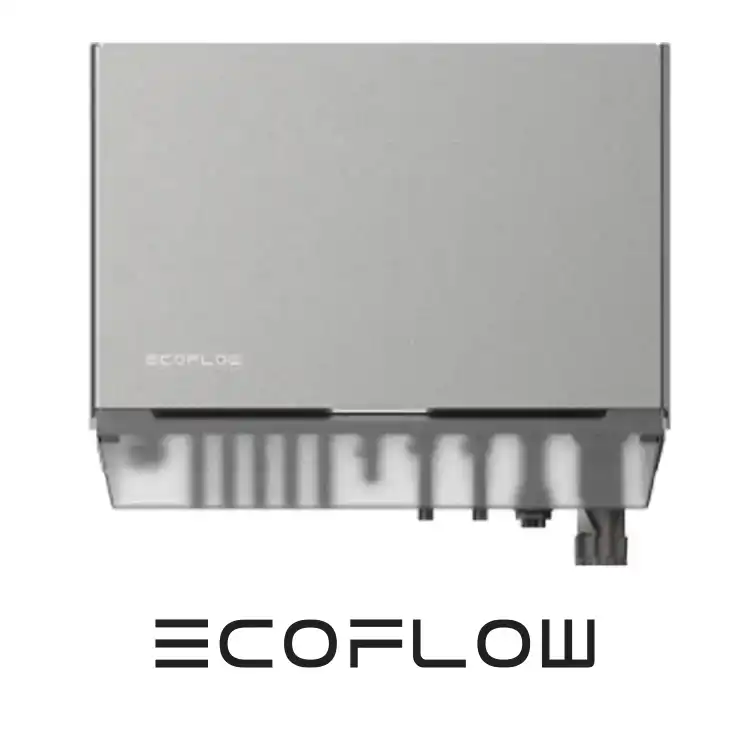
The AI-optimised 5-in-1 — solar inverter, battery, EV DC charger and EMS in one stackable tower.
- System type
- 5-in-1: PV hybrid inverter + battery PCS + battery pack + optional EV DC charger + EMS
- Single-phase inverter power
- 3.6 kW to 12 kW (software-configurable)
- Three-phase inverter power
- 5 kW to ~25 kW (up to ~30 kW on some C&I listings)
- MPPTs
- 2 MPPT (3.6–6 kW) / 3–4 MPPT (8–12 kW); DC:AC ratio up to 2:1
- Battery capacity
- 5.2 / 8.0 kWh stackable LFP modules, up to ~48 kWh per stack
- Battery chemistry
- LFP (LiFePO4)
Frequently asked questions — EcoFlow to SigEnergy
EcoFlow PowerOcean vs Sigenergy SigenStor — what is the core difference? +
Should I upgrade from EcoFlow to SigEnergy? +
Can the SigenStor charge an EV? +
Does the SigenStor work during a power cut? +
Is Ecoaim qualified to install the SigenStor in Scotland? +
What happens to my existing EcoFlow kit if I upgrade? +
Do I need to tell my DNO if I swap a PowerOcean for a SigenStor? +
How long does the DNO side take? +
What happens to my 15-year EcoFlow warranty if I move to Sigenergy? +
Do my solar panels have to be replaced when I change to a SigenStor? +
Can I keep my existing EcoFlow EV charger? +
What does an EcoFlow to SigenStor changeover cost? +
Will my export payments change if I upgrade? +
How long does the changeover take on site? +
Get an honest upgrade assessment
Tell us what you have now and what you want next. Ecoaim will assess whether moving from EcoFlow PowerOcean to the Sigenergy SigenStor is worth it for your home — and if it is not, we will say so. Use the form alongside for a free, no-obligation assessment from our Livingston EH54 team.
Related: Sigenergy SigenStor · EcoFlow · battery storage · EV charging.
Free quote in 24 hours.
No high-pressure sales. No commission-driven scripts. Just a no-obligation survey + transparent quote — covering every postcode in Scotland's Central Belt.