
Industrial Solar Panels for Factories Across Scotland
MCS-certified design, G99 management, installation and O&M for factories and manufacturing sites across Scotland's Central Belt, sized from your half-hourly meter data.




If you run a factory or manufacturing site in Scotland, industrial solar panels let you generate part of the daytime electricity you now buy, which DESNZ puts at an average of 24.51p/kWh for non-domestic users (April to June 2026, provisional, including the Climate Change Levy). Ecoaim is an MCS-certified installer based in Livingston, designing rooftop and ground-mount PV systems from 50 kWp to 1 MW+ for factories, cold stores, food processors and energy-intensive manufacturers across Scotland's Central Belt. Our in-house team and vetted MCS-certified trade partners handle feasibility, half-hourly load analysis, the G99 application to SP Energy Networks or SSEN, structural survey, installation and monitoring. Our published figures for 100–250 kWp systems point to payback in roughly four to seven years; your own half-hourly data sets the real number.
Why industrial buildings suit solar panels.
Five things make factories, manufacturing plants and other industrial sites strong candidates for solar PV:
Industrial is the largest end of the work we do, but not the only end — as commercial solar panel installers UK-wide we apply the same modelling to offices, hotels, schools and farms. See the full commercial solar installers specification for the mounting matrix and funding comparison behind every quote.
- Large, unshaded roof areas. At the 5–9 m² of usable roof per kWp used in our 100kW and 250kW guides, a 1,000 m² roof takes roughly 110–200 kWp. East–west slopes work too: on PVGIS figures a 10° east–west layout yields about 9% less a year than a south-facing slope at the same pitch.
- Daytime demand match. Manufacturing, refrigeration, process heat, compressed-air and lighting loads run during solar generation hours, so a well-sized array sends most of its output straight into the site's own load.
- Single-occupier sign-off. Unlike multi-tenant office stock, an owner-occupier or single-let industrial site has one decision-maker, which shortens the route from feasibility to a G99 application.
- Steel portal-frame structures. The RC62 fire-safety code from RISCAuthority and MCS notes that modern lightweight roofs often have little tolerance for extra weight, so a competent person surveys the structure before the design is fixed.
- Half-hourly metering already in place. Most industrial sites are already on HH-settled supply, so we can pull real demand data and design the array against actual consumption from day one.
High daytime self-consumption and capital allowances for solar are what make the numbers work on an industrial roof.
How industrial solar panels are sized: base load, shifts and shutdowns
Industrial solar panels pay back on the power your site uses while they generate, so the design starts from 12 months of half-hourly meter data, not the size of the roof. Three patterns set the size:
- Base load. Loads that run whenever the site is open (compressed air, refrigeration, extraction, process controls) set how large the array can be before it exports on a quiet day.
- Shifts and weekends. If production stops at weekends, two days in seven, carrying roughly 29% of the year's generation, have little load to meet. That surplus is exported, stored or capped.
- Shutdowns. On PVGIS figures for a 10° south-facing roof at Grangemouth, May, June and July each produce about 114–118 kWh per kWp, so a fortnight's shutdown in July leaves around 6.5% of the year's output with no load to meet.
Export needs your network operator's agreement through G99. Where local capacity is short, SSEN notes that an export limitation scheme may be significantly cheaper than reinforcement and may let you connect sooner; SP Energy Networks' G99 process follows the same ENA standard. Systems of 1 MW to under 10 MW fall into G99's Type B band, with different technical requirements and compliance forms.
Warehouses with a light daytime load are a different case: see our guide to solar panels for warehouses.
Six measurable returns from an industrial PV stack.
Industrial buyers don't buy panels — they buy the financial outcomes the panels enable. Our free feasibility study models yield, payback, capital allowances and the funding route against your own half-hourly data.
Materially lower unit cost
Spread over 25 years of output on a low-pitched Central Belt roof, the £800–£1,100 per kWp in our 100kW and 250kW guides works out at roughly 4–6p per kWh generated, before maintenance and finance. DESNZ puts the average non-domestic grid price at 24.51p/kWh (April to June 2026, provisional, including CCL).
Hedge against price volatility
Energy-cost variance kills budgeting. A rooftop PV + BESS stack converts a variable opex line into a 25-year fixed asset and protects against the next wholesale spike.
Scope 2 + ESG reporting
Every kWh generated and used on site is electricity you no longer purchase, which is what Scope 2 counts, and metered generation data gives you hard numbers for customer and supply-chain ESG questionnaires.
Lift asset value + EPC rating
On-site solar counts in the calculation behind a Scottish non-domestic EPC, which matters when a building over 1,000 m² is sold or let to a new tenant and needs a Section 63 action plan. It is also a tangible plant-and-equipment uplift on the balance sheet.
Energy security + grid resilience
G99 normally requires grid-connected generation to disconnect when the grid supply is lost, so a solar-only array goes off in a power cut. Paired with a battery and a backup-capable hybrid inverter, it can keep selected critical circuits running.
Capital allowances (AIA + 50% FYA)
Solar panels are special-rate plant, so the 100% year-one route is the Annual Investment Allowance (up to £1m a year), and companies can add the 50% first-year allowance for special-rate spend beyond that limit. Full expensing does not cover solar. Ask your accountant how a battery is treated (rules correct as of 15 October 2026).
From single-shed factories to multi-MW industrial campuses.
Industrial solar suits the sub-sectors below. Each has its own load profile, roof type and finance pattern — our feasibility tunes the array to yours.
Factories & Manufacturing
Process-heavy daytime load, portal-frame roofs — arrays sized to the base load in your half-hourly data.
Warehouses & Distribution
Vast clear roofs, modest daytime load — ideal candidates for PV + export contract.
Cold Stores & Food Processing
Refrigeration runs continuously — PV + BESS displaces peak DUoS bands.
Logistics & 3PL
Pair rooftop PV with workplace EV charging for fleet electrification.
Heavy Manufacturing
Large G99 connections, half-hourly metering — full PPA structuring available.
Steel, Metals & Chemicals
Scope 2 exposed — strong ESG-driven business case.
Industrial Estates / Multi-let
Landlord-led common-roof PV with tenant export arrangements.
Off-grid / Weak-grid sites
PV and battery storage alongside a standby generator, so the generator runs less.
Industrial solar panel costs in Scotland (2026).
Indicative installed cost, usable roof area and payback for the two system sizes we publish in detail. They are planning ranges, not quotes: roof condition, access, switchgear and the grid connection all move the price, and we tune the model to your real data at feasibility. Smaller and larger systems are priced from the feasibility study.
| System size | Typical site | Usable roof | Indicative installed cost | Indicative payback |
|---|---|---|---|---|
| 100 kWp | Factory or plant rooftop | ~500 – 900 m² | £75k – £105k | ~4 – 7 yrs |
| 250 kWp | Large industrial roof | ~1,250 – 2,250 m² | £175k – £240k | ~4 – 7 yrs |
Figures from our 100kW and 250kW guides. Business premises carry 20% VAT, which a VAT-registered business can normally reclaim. For comparison, non-domestic users paid an average of 24.51p/kWh for electricity in April to June 2026, including the Climate Change Levy, on provisional DESNZ figures (correct as of 15 October 2026): gov.uk.
Industrial roof surveys: load, fragility, asbestos and CDM
Four roof checks come before design:
- Structure. Portal frames are commonly designed with a services allowance of 0.1–0.25 kN/m² (roughly 10–25 kg per m²), depending on use and sprinklers. A double-glass panel such as JA Solar's JAM54D40 weighs about 11 kg per m² before rails, so a competent person checks what the frame was designed for and what already hangs from it.
- Fragile sheets. HSE advises treating every roof as fragile until a competent person confirms otherwise; falls through fragile roofs and rooflights are among the main causes of death and injury in roof work. Stagings, guard rails or safety nets are planned for every fragile area.
- Asbestos. The duty to manage asbestos covers all non-domestic premises, and HSE's survey guide calls for a refurbishment survey before work that will disturb older sheeting.
- Pitch. Portal-frame roofs are typically pitched at 5–10°, and PVGIS puts a south-facing 10° roof at Grangemouth at about 788 kWh per kWp a year, against 879 at the optimum tilt.
Installing solar is construction work under CDM 2015, so you have client duties, including written appointments of a principal designer and principal contractor when there is more than one contractor, and notifying HSE of jobs scheduled to exceed 500 person days, or 30 working days with more than 20 workers at once.
A 250kW system needs a usable roof of roughly 1,250–2,250 m²; see commercial solar by roof type for mounting and commercial solar planning permission in Scotland for permitted development.
From half-hourly data to handover and monitoring.
Our in-house team and vetted MCS-certified trade partners take the project from the first data pull to handover, with the G99 application managed as standard.
Site survey + half-hourly load analysis
We pull 12 months of half-hourly data, walk the roof, check structural capacity and shading, and model the optimum array against your real demand profile.
System design + financial model
Detailed PVGIS yield, single-line diagrams, structural calcs, and a CapEx / HP / PPA financial model with IRR, NPV and payback so finance teams can sign off the business case.
G99 DNO application
We submit and manage the full G99 connection package with SP Energy Networks or SSEN, the distribution network operators for Scotland — including export limitation where needed.
Structural works + scaffold + install
Roof anchor and ballast systems certified for your portal-frame loading, RAMS-compliant scaffold, and a sequenced install that keeps the site operational.
Commissioning + handover
Witness-test inverter commissioning, MCS handover pack (where applicable), O&M manuals, asset register and as-built drawings for your insurer.
Monitoring + O&M
Performance monitoring with alerts if output dips, preventative maintenance contracts and annual yield reviews. RC62 recommends a competent person inspects commercial systems at least once a year.
Fire safety and your insurer: what RC62 expects
Talk to your property insurer before the design is fixed. RC62, the 2023 PV fire-safety code from RISCAuthority and MCS with Solar Energy UK, is aimed at insurers and their clients and focuses on commercial rooftops. Insurers set their own requirements, but it is a good guide:
- The roof. RC62 wants panels on non-combustible roofs (Class A1 or A2-s1, d0 to BS EN 13501-1) and says they shall not lower the roof's fire performance; where a combustible roof can't be avoided, it calls for a fire-resistant covering.
- Assessment and detection. An updated fire risk assessment by a competent person (in Scotland, the employer's duty sits in the Fire (Scotland) Act 2005), and automatic fire detection wherever inverters, isolators and distribution boards are indoors.
- Firefighter access. Clear routes rather than wall-to-wall panels, "PV on the roof" signage, and a fire service switch to isolate the DC side where the wiring regulations or your insurer require one.
- Explosive atmospheres. Where combustible dust or flammable vapours can form an explosive atmosphere, the array is reviewed under DSEAR.
RC62 also asks who owns the building and who owns the system; under a lease or a solar PPA they can differ.
Off-grid + hybrid microgrids for resilient industrial sites.
Some industrial sites can't justify the cost of a network upgrade, sit at the end of a weak line, or run critical loads that cannot drop. Commercial off-grid solar systems and hybrid set-ups combine PV, battery storage (BESS) and, where a site already has one, a standby generator, so solar and storage carry more of the load and the grid or generator less.
- Diesel displacement. Where a site already runs a generator, solar and storage can cut its running hours.
- Critical-load backup. A grid-tied array disconnects in a power cut, but a battery with a backup-capable hybrid inverter can keep chosen circuits, such as refrigeration controls, servers and process control, running.
- Constrained connections. Where extra import capacity would mean network reinforcement, a battery that shaves peaks can help keep the site within its agreed capacity.
- Hybrid control. SigEnergy's commercial hybrid inverters support on- and off-grid set-ups, whole- or part-site backup and starting a standby generator through a transfer switch: see SigEnergy commercial systems.
Peak charges and battery storage: how network charges work in Scotland
On a half-hourly supply, network charges depend on when you use power. They are invoiced to your supplier and reach you in your unit rate or as a line on the bill, peaking in a weekday red band (table below). In SP Energy Networks' 2026/27 tariffs for central and southern Scotland, a low-voltage site with current-transformer (CT) metering and half-hourly settlement pays a distribution charge of 10.798p per kWh in the red band, 1.103p in amber and 0.029p in green.
Solar alone does little about that in winter. On PVGIS's average December day, a low-pitched roof at Grangemouth has stopped generating by 16:00, before SP Energy Networks' red band starts. A battery charged from any midday surplus, or from the grid in the green band, can cover those hours.
Capacity is the second lever. Your agreed import capacity carries a daily charge per kVA, and exceeding it is charged for the whole billing period. A battery that shaves peaks helps you stay inside it, but SP Energy Networks allows only one reduction in any 12 months, and capacity given up may later need paid-for reinforcement to win back. The residual charge is a fixed daily amount set by your site's charging band.
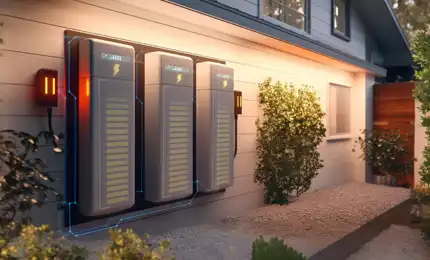
SigEnergy's commercial range, the SigenStack battery and Sigen M1 inverters, can be set up for peak shaving, solar self-consumption and backup. Our guide to sizing a commercial battery explains the trade-offs, and a free feasibility study models them against your own half-hourly data.
| Network area (2026/27 charging statements; weekday times include bank holidays) | Red band | Amber band | Green band |
|---|---|---|---|
| SP Energy Networks: central and southern Scotland | 16:30–19:30 Monday to Friday | 08:00–16:30 and 19:30–22:30 Monday to Friday; 16:00–20:00 Saturday and Sunday | All other times |
| SSEN: north of Scotland | 16:00–19:00 Monday to Friday | 07:00–16:00 and 19:00–21:00 Monday to Friday; 12:00–20:00 Saturday and Sunday | All other times |
CapEx, Hire Purchase, Asset Finance or PPA.
Industrial solar is funded in one of three broad ways. We model all of them at feasibility so the board sees the net-of-tax answer.
CapEx
Outright purchase and full ownership. The Annual Investment Allowance can relieve 100% of the cost in year one (up to £1m a year), and companies can claim the 50% special-rate first-year allowance on spend above that. Confirm with your accountant (rules correct as of 15 October 2026).
Best when: cash reserves available and shortest payback is the priority.
Hire Purchase / Asset Finance
Spread the cost through a business lender. With hire purchase, the business making the payments normally counts as the owner for capital allowances; with a lease, they generally sit with the leasing company. We don't lend, but we give your lender and accountant the figures.
Best when: cash flow matters and savings should cover the repayment.
Power Purchase Agreement (PPA)
Under a solar PPA a funder finances, owns and looks after the array, and you pay an agreed rate for each unit it supplies over a long contract. No capital outlay; the funder claims the capital allowances.
Best when: zero up-front investment + immediate energy-cost saving is the priority.
Business finance is subject to the lender's status checks and terms. Ecoaim acts as a credit broker, not a lender. Capital allowances, VAT and each funding route are set out on our business funding page; take your own tax advice.
MCS-certified and Livingston-based, working across Scotland's Central Belt.
- Livingston HQ + Central Belt coverage. EH54 7EG base, working across Scotland's Central Belt, with SP Energy Networks and SSEN G99 applications handled as standard.
- In-house commercial team. Not a call centre: our in-house team and vetted MCS-certified trade partners take the project from feasibility to handover.
- MCS-certified for solar PV and battery storage. Ofgem's Smart Export Guarantee guidance accepts MCS as proof of certification for systems up to 50 kW (correct as of 15 October 2026), and our status can be checked on the MCS register.
- TrustMark registered, RECC and HIES member. Government-endorsed quality scheme registration and the consumer codes behind our domestic work, each checkable on its public register. See our accreditations.
The trust stack.
Full accreditation list, with a link to verify each one, on the accreditations page. See also the official MCS register (mcscertified.com) for live status.
The questions industrial buyers ask first.
How much do industrial solar panels cost in Scotland? +
Our published indicative figures put a 100 kWp rooftop system at £75,000–£105,000 installed (roughly £800–£1,100 per kWp) and a 250 kWp system at £175,000–£240,000, with indicative paybacks of roughly four to seven years. They are planning ranges, not quotes: roof condition, access, switchgear and the grid connection all move the price. Business premises carry 20% VAT, which a VAT-registered business can normally reclaim.
Are industrial solar installers required to be MCS certified? +
For export payments, it depends on size. Under Ofgem guidance for the Smart Export Guarantee, a solar PV system up to 50 kW must show that both the installation and the installer are certified, through MCS or an equivalent scheme; above 50 kW and up to 5 MW only the installation needs certifying, and the SEG licensee chooses what proof to accept (rules correct as of 15 October 2026). Ecoaim holds MCS certification for solar PV and battery storage.
Do I need planning permission for industrial solar panels in Scotland? +
Usually not for a roof. Since 24 May 2024, solar panels on a non-domestic building in Scotland are permitted development with no size limit, provided no part protrudes more than 1 metre from the roof surface, the building is not listed or within the curtilage of a listed building, and the site is not within 3 kilometres of an aerodrome or technical site or in a National Park, National Scenic Area, World Heritage Site or historic garden or designed landscape; conservation areas also exclude the principal elevation and any side elevation that fronts a road. Ground-mounted panels are different: permitted development stops at 12 m² in total, so a meaningful ground array needs a planning application.
What is a G99 application and do I need one? +
G99 is the Energy Networks Association standard for connecting generation, including battery storage, above the G98 ceiling of 16 A per phase, which works out at 3.68 kW single-phase or 11.04 kW three-phase. Every industrial-scale system is therefore a G99 connection, and your network operator has to accept the application before installation; in Scotland that is SP Energy Networks in the south, including most of the Central Belt, or SSEN in the north. Ecoaim manages the full G99 submission as standard.
How long do industrial solar panels last? +
The JA Solar panels we fit carry a 30-year linear performance warranty; on the JA Solar JAM54D40 datasheet, for example, that limits degradation to 1% in the first year and 0.4% a year after, leaving at least 87.4% of rated output in year 30. Inverters have shorter lives, and the Energy Saving Trust advises replacing them after around 12 years, so budget for at least one replacement. Our O&M service includes performance monitoring with alerts if output dips, so faults are caught early.
What finance options are available for industrial solar? +
There are three broad routes: buying outright, where capital allowances can reduce the net cost; hire purchase or leasing through a business lender, which spreads the cost; and a solar PPA, under which a funder finances and owns the array and sells you the power you use from it. Capital allowances normally stay with you under outright purchase or hire purchase, and sit with the owner under a lease or a PPA. We do not lend; our business funding and PPA pages compare the routes, and we model each one at feasibility. Confirm the tax position with your accountant.
Can a factory run on solar power alone? +
Rarely, and not through a Scottish winter. On PVGIS figures for a 10° south-facing roof at Grangemouth, July produces about 114 kWh per kWp and December about 11, and on an average December day output has stopped by 16:00. Batteries move daytime surplus into the evening but cannot carry summer into winter, so solar on a factory works by cutting daytime grid imports, with the grid connection covering the rest.
Can solar panels go on an asbestos cement factory roof? +
Sometimes, but the roof is dealt with first. HSE says buildings constructed after 2000 are unlikely to contain asbestos, so older cement sheeting should be treated as suspect until it has been assessed, and HSE survey guidance calls for a refurbishment survey before work that will disturb it. HSE also advises treating any sheeted roof as fragile until a competent person confirms otherwise, so the survey and an assessment of the roof by a competent person come before any design.
More on industrial & commercial solar.
Free industrial solar feasibility — we respond within 2 hours.
Tell us your annual kWh, roof type and rough timeline, and when we call back we model the system size, payback and finance route — no obligation, no hard-sell.
Free quote in 24 hours.
No high-pressure sales. No commission-driven scripts. Just a no-obligation survey + transparent quote — covering every postcode in Scotland's Central Belt.