
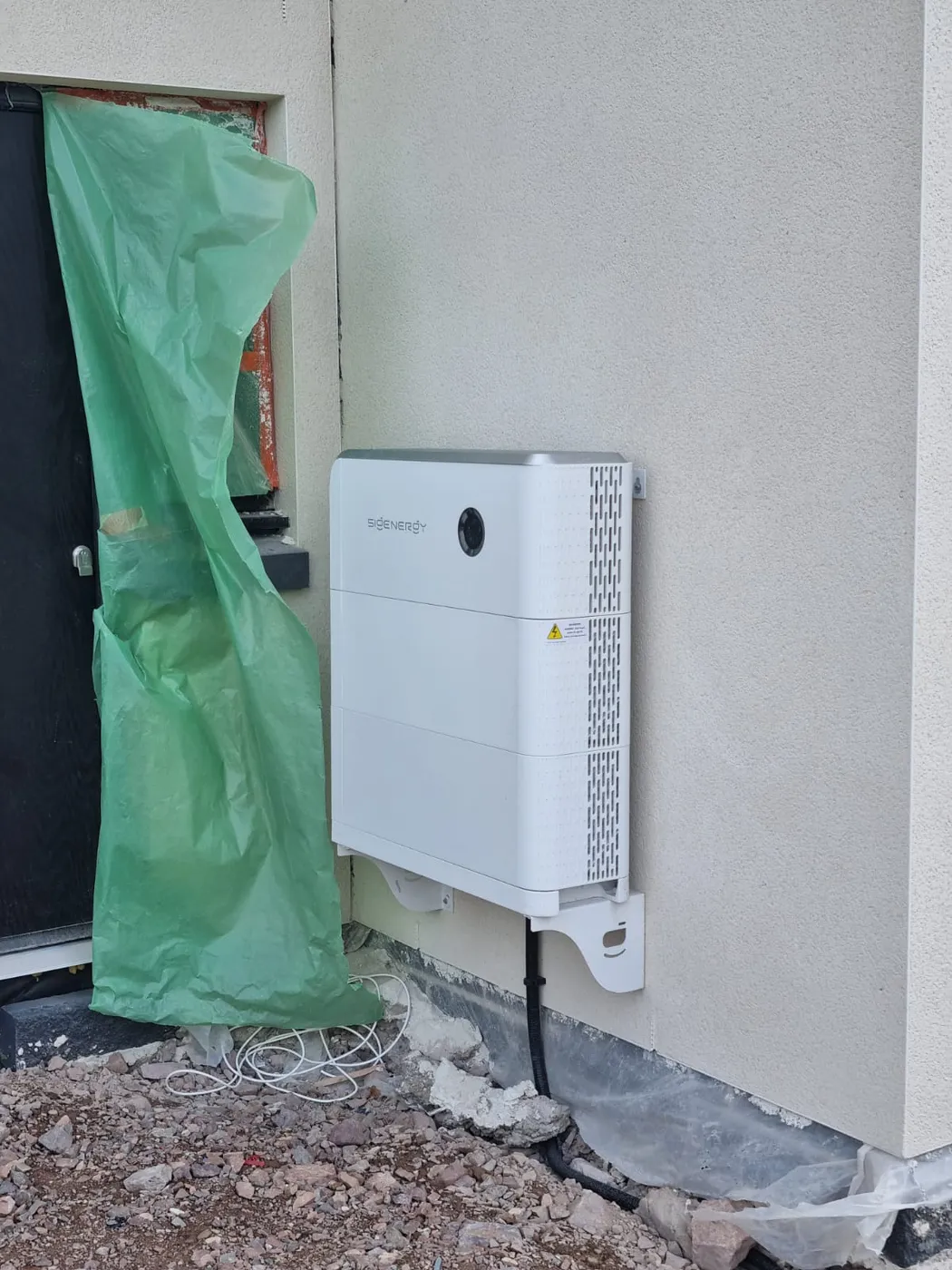
Add an AC Coupled Battery to Your Existing Solar Panels
If you already have solar panels and watch much of their output go to the grid, a battery can keep more of it at home. This page is for owners of existing systems, Feed-in Tariff homes included, who are weighing an AC coupled battery against replacing the inverter with a hybrid.




An AC coupled battery has its own inverter and connects on the household side of your system, so your existing solar inverter carries on exactly as it is. It's usually the least disruptive way to add a battery to existing solar, and on a Feed-in Tariff system it can sit after the generation meter so the meter still records only solar. The alternative is DC coupling: swapping the old inverter for a hybrid, which suits systems whose inverter is near the end of its life. With AC coupling, the battery's inverter adds to the total your network operator counts.
AC coupled vs DC coupled: how each works
Solar panels make DC, batteries store DC and your home runs on AC, so the real question is where the battery joins the chain.
With an AC coupled battery, the existing solar inverter converts the panels' output to AC as it always has. A separate battery inverter turns any surplus back into DC to charge the battery, then converts it to AC again when the house needs it. The battery can also charge from the grid at cheap times.
With a DC coupled battery, a hybrid inverter replaces the old one and the battery connects to it on the DC side, so solar charges the battery before any conversion. Fewer conversion steps mean a little less energy lost on the way in, although the Energy Saving Trust points out that using stored energy is less efficient than using it directly, so some energy is lost whichever design you choose. If you're starting with no panels at all, our guide to solar panels with battery storage covers designing both together.
| Question | AC coupled battery | DC coupled (hybrid swap) |
|---|---|---|
| Existing solar inverter | Stays in place | Replaced by a hybrid |
| Conversions for stored solar | DC to AC, back to DC, then AC again | DC straight into the battery |
| Charging from the grid | Yes | Yes, through the hybrid |
| Feed-in Tariff generation meter | Battery can sit after the meter | Battery sits before the meter, so metering needs care |
| Network operator limit | Battery inverter adds to the solar inverter's rating | One inverter rating covers both |
| Works with microinverters | Yes | No, unless the microinverters are replaced |
| Best when | The existing inverter has years left | The existing inverter is old or has failed |
Which route suits your existing system
Four things decide it.
- Inverter age. Inverters typically need replacing at around 12 years, according to the Energy Saving Trust. If yours is close to that, fitting a hybrid now can make more sense than buying a battery inverter and then a new solar inverter a year or two apart. Our inverter replacement page covers the signs that it's time. If your inverter is younger, AC coupling keeps a healthy unit working.
- Feed-in Tariff status. AC coupling after the generation meter is the most straightforward metering arrangement. A hybrid can still work on FIT with the right meter or settings, as the next section explains.
- Microinverters or optimisers. Microinverter systems already produce AC at each panel, so an AC coupled battery is the practical route. With optimisers, it depends on what the central inverter supports.
- Array size and Scottish winters. A small FIT-era array may have little spare solar for much of the year. In PVGIS's model, each kilowatt-peak of south-facing panels near Livingston yields roughly 110 kWh in June and only around 19 kWh in December, so through the winter a retrofit battery earns its keep by charging on cheap overnight electricity rather than from the roof.
Not sure how your current system is put together? Our solar inverter guide explains the main types.
Feed-in Tariff systems: protecting your payments
Adding a battery doesn't end FIT accreditation. Ofgem's guidance is that storage can be added without affecting it, provided the installation keeps meeting the metering rules, and for storage up to 50 kW it recommends an MCS installer working to the MCS battery standard. Everything turns on one question: does your generation meter still measure only the electricity your panels produce?
- Battery after the generation meter, the usual AC coupled layout: the meter sees only solar, so generation payments continue, and so does deemed export.
- Battery before the generation meter, as with a hybrid swap: Ofgem accepts this if inverter settings stop the battery charging from the grid, or if the generation meter is an approved bi-directional meter that displays a net figure.
- Metered FIT export: if your FIT export is metered rather than deemed and the battery can charge from the grid, Ofgem's examples show metered export payments can't be made, because the export meter can't separate solar export from battery export. Deemed export, where it applies, is unaffected.
You must tell your FIT licensee when a battery is connected. Expect to provide an updated single-line diagram, the meter readings used for your FIT payments, the dates the battery was installed and commissioned and, for MCS-FIT systems, the declaration forms in Ofgem's co-location guidance; we prepare that pack. For solar PV, deemed export is paid on 50% of the generation meter reading. If you later move your export to Octopus Flux, Octopus requires you to give up deemed export permanently, though your FIT generation payments carry on.
Sizing a battery for an existing system
The Energy Saving Trust says a typical home battery might be 10 kWh but there's no exact formula, so we size from your bills and usage rather than a catalogue. Three numbers matter:
- Evening and overnight use. The battery should cover the expensive hours you actually use, not sit half-empty.
- Summer surplus. On PVGIS figures, a 4 kWp south-facing system near Livingston makes roughly 440 kWh in June but about 76 kWh in December. Size only for the summer surplus and the battery is oversized for half the year.
- Battery inverter power, not just capacity. The kW rating sets how fast the battery fills. Octopus Flux's cheap window runs from 02:00 to 05:00, so a 3 kW battery inverter can put in at most about 9 kWh over those three hours before losses, however large the battery.
Power rating matters for the grid connection too. A 3.68 kW solar inverter plus a 3 kW battery inverter makes 6.68 kW combined, well over the single-phase G98 limit.
Tariffs that make a retrofit battery pay
A battery earns its money by moving electricity in time: charging when power is cheap or the panels are producing, then covering the house or exporting when power is dear. On a flat tariff the gain is modest. Our own model for a new 4 kWp system puts the difference a 5 kWh battery makes at about £118 a year on a flat tariff, which is why we don't sell batteries on that basis.
Time-of-use tariffs change the sums. Octopus Flux prices electricity cheapest between 02:00 and 05:00 and highest between 16:00 and 19:00, for import and export alike. It needs a smart meter sending half-hourly readings, solar panels and a home battery, and Octopus asks for your MCS document before completing the switch. Intelligent Octopus Flux, which controls compatible batteries automatically, was not open to most new sign-ups when we checked on 6 October 2026. Rates vary by region and change often, so compare current options in our guide to the best tariffs for solar and battery homes.
One export detail: under Smart Export Guarantee rules, a supplier isn't obliged to pay for exported electricity that came from a battery charged from the grid, though it can choose to. Check your export tariff's terms before planning to sell stored grid power back.
Network operator rules for the battery inverter
Network operators treat a battery as both demand and generation, so its inverter counts. G98 looks at the combined rating of every inverter at the property, solar and battery together, and the ceiling is 16 A per phase, or 3.68 kW on a single-phase home. Stay under it and we notify the network operator within 28 days of commissioning. Go over it and a G99 application must be approved before the battery goes in.
Any battery inverter added to an existing 3.68 kW solar inverter crosses that line, so G99 is common for AC coupled retrofits; on a smaller, older system the combined total may still fit under G98. The ENA has a fast-track route for storage added alongside existing generation, and SSEN, which runs the network in the north of Scotland, aims to respond to G99 fast-track applications within 10 working days. For a typical home retrofit, where each inverter is 3.68 kW or less and the total is no more than 7.36 kW, it may require an export limitation scheme that caps export at 3.68 kW; the battery can't be connected until its assessment is complete, and the installation then has to be commissioned within three months. In Central and Southern Scotland the application goes to SP Energy Networks through its own process; see our SP Energy Networks page.
A hybrid swap can sidestep the question. One G98 type-tested 3.68 kW hybrid inverter running both the panels and the battery keeps the whole system within G98.
What a retrofit battery costs
The Energy Saving Trust puts home battery storage at £1,500 to £10,000 depending on type and size, with a 5 kWh system around £4,600 (page updated 6 October 2026). As a reference point, our own typical installed price for a new 4 kWp solar system is £6,500–£8,500, or £10,500–£13,500 with a 5 kWh battery fitted at the same time. A retrofit is priced on its own, because it depends on the route:
- AC coupled: the battery and its inverter, the connection into your consumer unit, any metering changes and the network operator application.
- DC coupled: a hybrid inverter installation in place of the old unit, plus the battery, which can be the better value if the old inverter is due for replacement anyway.
VAT is zero for now. Under HMRC's VAT Notice 708/6, adding a battery to a home's existing solar panels carries 0% VAT until 31 March 2027; from 1 April 2027 the rate is 5%. The Energy Saving Trust is candid that savings won't always justify a battery on their own, and we'll tell you if yours is one of those cases. Get your free quote with both routes priced.
Batteries we fit to existing systems
We install a short list of battery platforms, chosen at survey to suit your existing inverter, your space and any need for backup power:
- Tesla Powerwall 3, which has a solar inverter built in and can also be added to a home that already has solar.
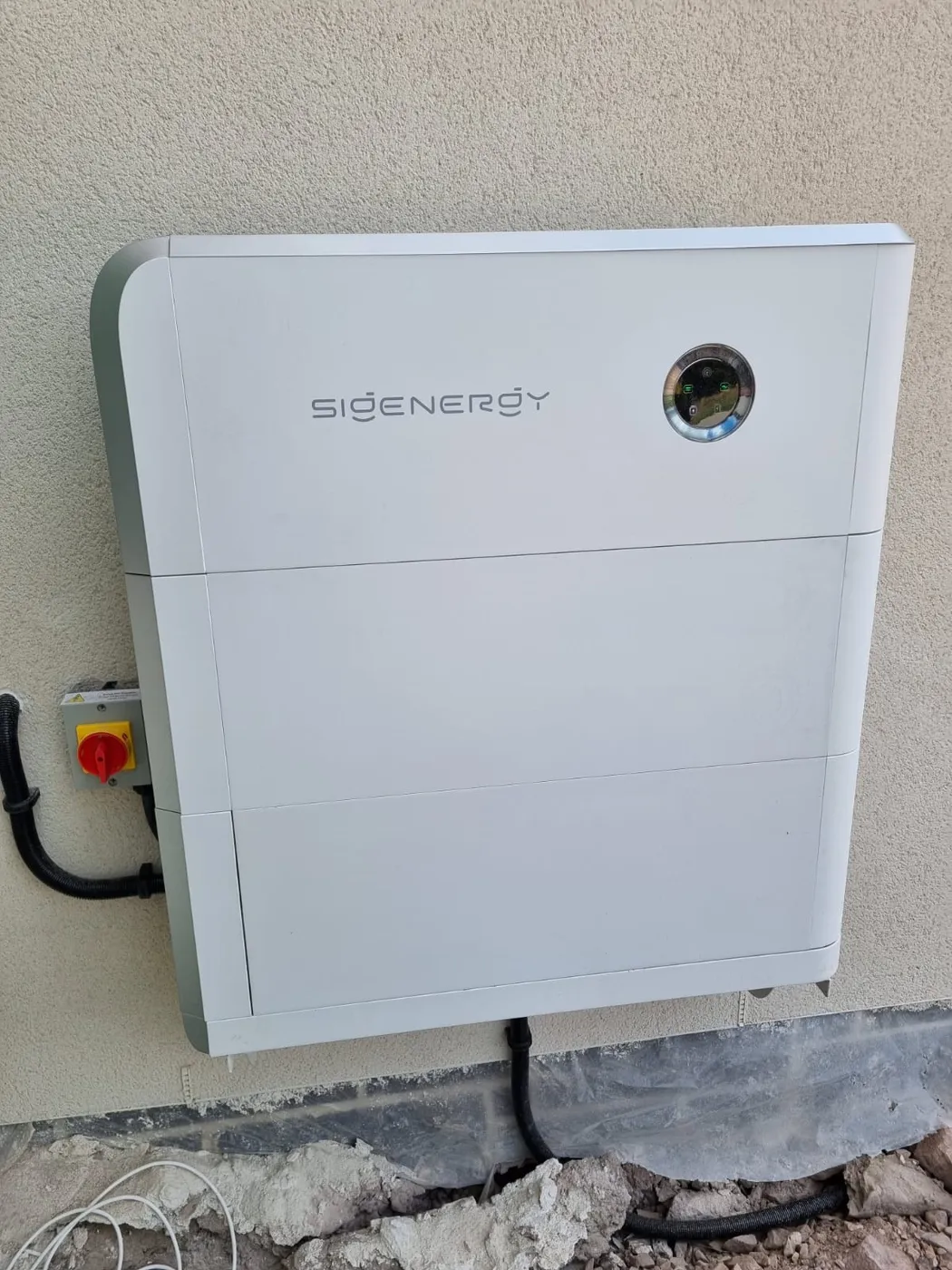
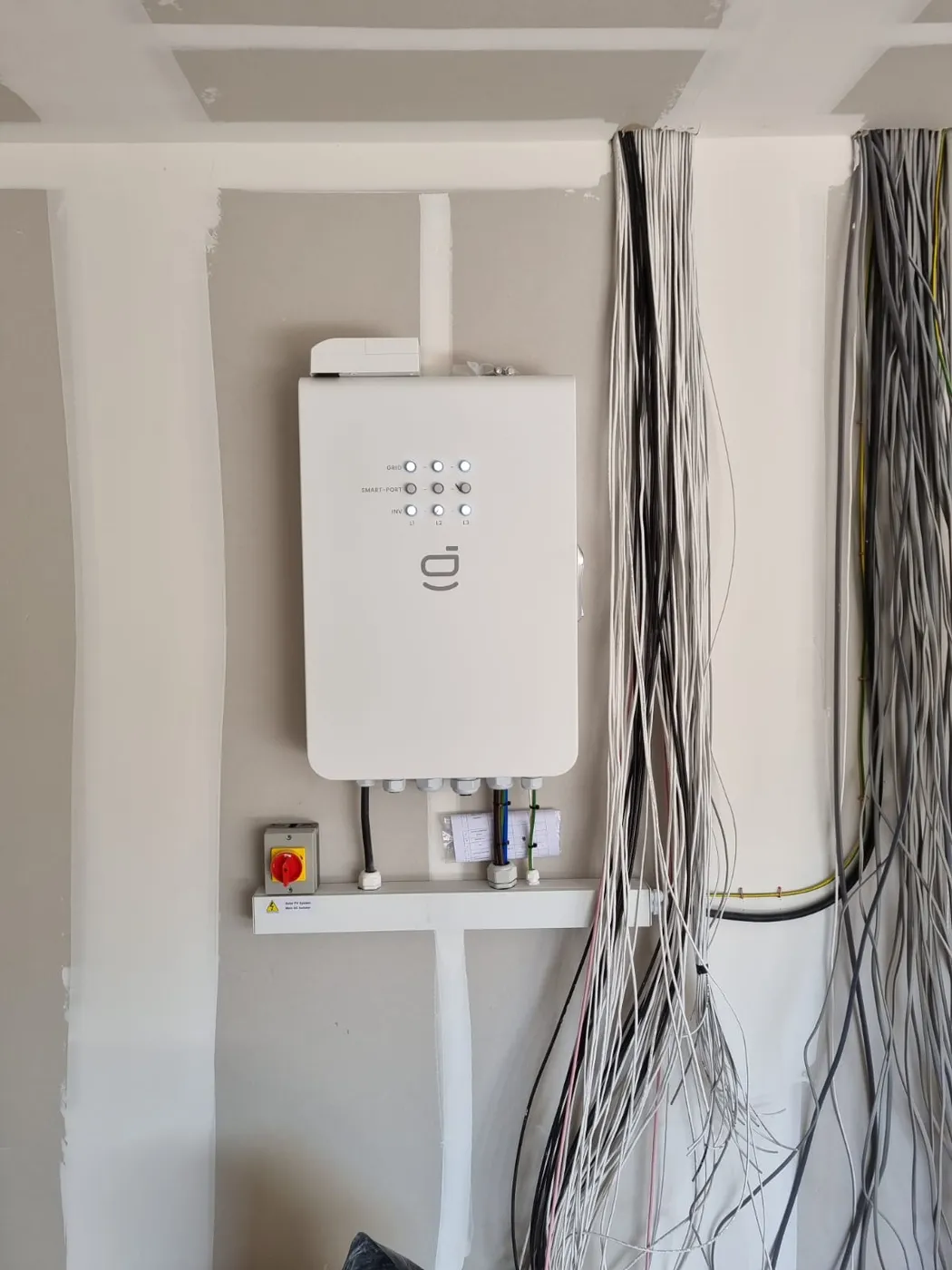
- Sigenergy SigenStor, fitted as a certified Sigenergy installer, for homes that want a modular stack or a three-phase system. See our SigenStor page.
- EcoFlow PowerOcean, a battery system with its own hybrid inverter.
- Sunsynk hybrid inverters with a compatible battery, where replacing the old inverter is the right call.
We don't print headline specifications here because they change between product versions; your written quote confirms the exact model, capacity and warranty. For more on the batteries themselves, see our home battery storage page.
How a battery retrofit works with Ecoaim
- Survey. We photograph your consumer unit, the existing inverter's label and your generation and export meters, and agree where the battery can go.
- Route and design. AC coupled or hybrid swap, sized to your usage and tariff, with the reasoning written down.
- Paperwork first. The G98 notification or G99 application, and the FIT licensee pack if you're on the Feed-in Tariff.
- Installation. The battery is fitted by our in-house team and vetted MCS-certified trade partners, with an Ecoaim engineer signing off the work.
- Commissioning and handover. We test the system, set the charging schedule to suit your tariff, register the warranties and issue the MCS certificate for the battery installation.
Get your free quote and tell us your FIT status, inverter model and tariff; we'll come back with both routes compared.
AC coupled battery questions, answered
Can I add a battery to my existing solar panels? +
What is an AC coupled battery? +
Is an AC coupled battery less efficient than DC coupling? +
Will adding a battery affect my Feed-in Tariff payments? +
Do I need network operator approval to add a battery? +
Can an AC coupled battery charge from the grid overnight? +
Does an AC coupled battery work during a power cut? +
Is VAT charged on adding a battery to existing solar? +
Related guides
Our reviews on Trustpilot
Free quote in 24 hours.
No high-pressure sales. No commission-driven scripts. Just a no-obligation survey + transparent quote — covering every postcode in Scotland's Central Belt.