
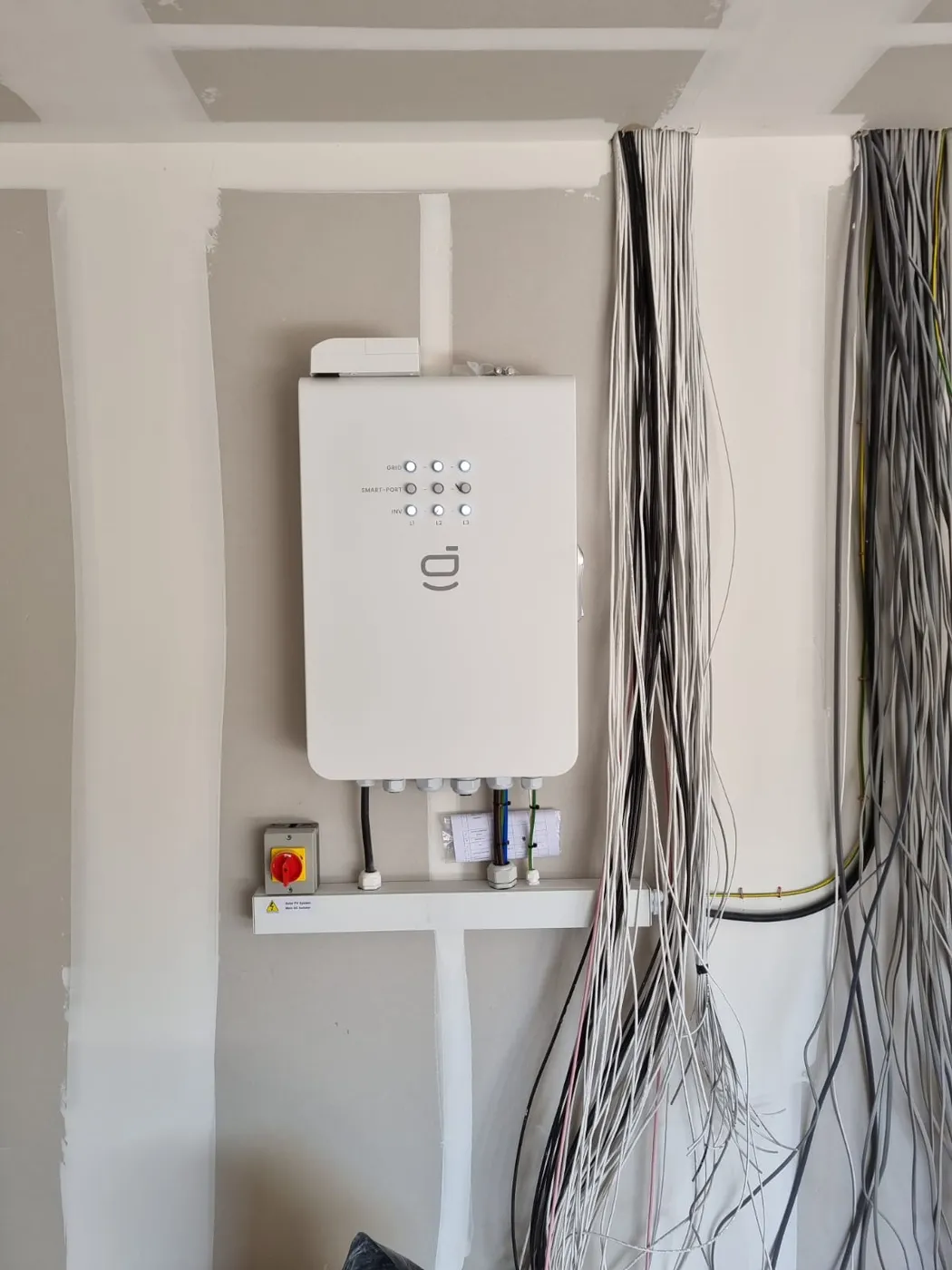
Solar Inverter Replacement and Repair in Scotland
If your solar system has gone quiet, the app is showing a fault code, or your inverter dates from the Feed-in Tariff years, this page is for you. We diagnose faults, arrange repairs where they make sense and handle solar inverter replacement across the Central Belt, including the FIT and DNO paperwork.




Solar inverter replacement is due when a unit has failed, keeps tripping or is producing well below last year's output. Energy Saving Trust guidance is to plan on a new inverter at around the 12-year mark, and the EST figure for the job, as quoted by MoneySavingExpert, is around £800. Ofgem lets you repair or replace equipment without losing Feed-in Tariff accreditation, provided the scheme rules are still met and you tell your FIT licensee. A like-for-like swap keeps things simple; a hybrid lets you add a battery later. Your installer tells the network operator.
Signs your solar inverter is failing
Inverters usually show that something is wrong before they stop altogether. Whatever the brand, the common signs are:
- No display, no lights, no data. If the screen is blank in daylight and the app has stopped updating, check the consumer unit and the AC isolator first. If those are on, the inverter may have failed.
- A fault code that keeps coming back. A one-off grid warning usually clears itself; the same code every day doesn't.
- Lower generation than last year. Compare the same month year on year on your generation meter. A sudden step down, rather than a dull month, points to a fault.
- Cutting out on bright afternoons. G98 inverters must trip if the voltage at your supply stays above 262.2 V for a second, so repeated over-voltage trips can be a network problem for the DNO to investigate rather than an inverter fault.
- Isolation or earth fault messages, often on damp mornings. Inverters test the insulation of the DC wiring before they connect, and water in a roof connector or damaged cable can fail that test.
- Buzzing, a struggling fan, scorch marks or a burning smell. Stop there and call us.
Please don't open the casing or unplug DC cables. Panels keep producing DC whenever light falls on them, so parts of the system stay live in daylight even with the inverter switched off. For how inverters work and the types available, see our solar inverter guide.
Why Feed-in Tariff-era inverters are failing now
The Feed-in Tariff opened on 1 April 2010 and drove a wave of home solar until it closed to new applicants in 2019. A system fitted between 2010 and 2015 now has an inverter 11 to 16 years old, close to or past the roughly 12 years the Energy Saving Trust tells owners to plan for. Warranties were short then too: the Energy Saving Trust's older inverter guidance put standard string inverter warranties at five to ten years and called the string inverter the single most common cause of failure in a solar PV system.
The panels on those roofs usually have plenty of life left, and so do the payments. Solar PV installations with a FIT eligibility date before 1 August 2012 are paid for 25 years and later ones for 20, so a 2011 system has income running into the mid-2030s. Every sunny week with a dead inverter is generation that isn't being paid for. If the panels themselves are tired or the array is small, price a wider solar panel upgrade at the same time.
Repair or replace?
Not every fault means a new inverter, and solar inverter repair is sometimes the right answer. As Which? has put it, if your inverter is still working, you don't need to replace it, and plenty of faults have nothing to do with the inverter at all: a tripped breaker or RCD, a DC isolator left off, a lost Wi-Fi connection that only stops the app, or high network voltage that the DNO needs to look at.
A diagnostic visit rules those out first, then reads the fault log and tests each string. If the inverter is still within the manufacturer's warranty, start with the company that fitted it, or with us if that firm has gone; the maker may repair or swap the unit. Out of warranty, we'll price any repair the manufacturer or a specialist offers alongside a replacement, so you can compare like with like.
GivEnergy owners need a different first step. GivEnergy Ltd entered administration on 9 April 2026, and its administrator has said no further hardware warranties will be honoured by GivEnergy Ltd. The UK Energy Storage Association advises contacting your installer first, and points owners who paid by credit card towards their Consumer Credit Act protections.
What solar inverter replacement costs
Independent figures give a starting point for solar panel inverter replacement cost. The Energy Saving Trust's benchmark, quoted by MoneySavingExpert in its September 2026 update, is around £800 to replace an inverter, and The Eco Experts' July 2024 guide puts a standard string inverter at £500–£1,000, depending on system size. What moves your price:
- Type and size. A like-for-like string unit is the cheapest route, a hybrid costs more, and microinverter systems are priced per failed unit plus roof access.
- Where it lives. A unit on a garage wall is quicker to swap than one wedged into a tight loft.
- What's around it. New isolators, cabling, surge protection or consumer unit work, if the original installation needs bringing up to current standards.
- Compatibility. Systems with power optimisers need an inverter that works with them.
- Paperwork. DNO forms, the commissioning record and the evidence your FIT licensee asks for.
VAT depends on the job. HMRC's VAT Notice 708/6 treats the inverter as part of a solar PV installation and zero-rates retrofitting a battery to solar panels in a home until 31 March 2027; for a stand-alone inverter swap, your quote will show the VAT line separately. Get your free quote and we'll price like-for-like and hybrid options side by side.
| Replacement route | What's involved | Market guide | Source (checked 6 October 2026) |
|---|---|---|---|
| Like-for-like inverter swap | New unit on the same array and protection | Around £800 | Energy Saving Trust, quoted by MoneySavingExpert |
| String inverter | A standard string inverter, priced by system size | £500–£1,000 | The Eco Experts (July 2024) |
| One microinverter | Unit behind a panel; roof access needed | £100–£150 per unit | The Eco Experts (July 2024) |
| Hybrid plus a battery | Hybrid inverter and battery fitted together | Battery alone around £4,600 for 5 kWh | Energy Saving Trust |
Like-for-like or upgrade to a hybrid?
A like-for-like replacement matches the old inverter's rating and input range. It's the quickest route, keeps a G98 system within G98, and gives your FIT licensee the least to check.
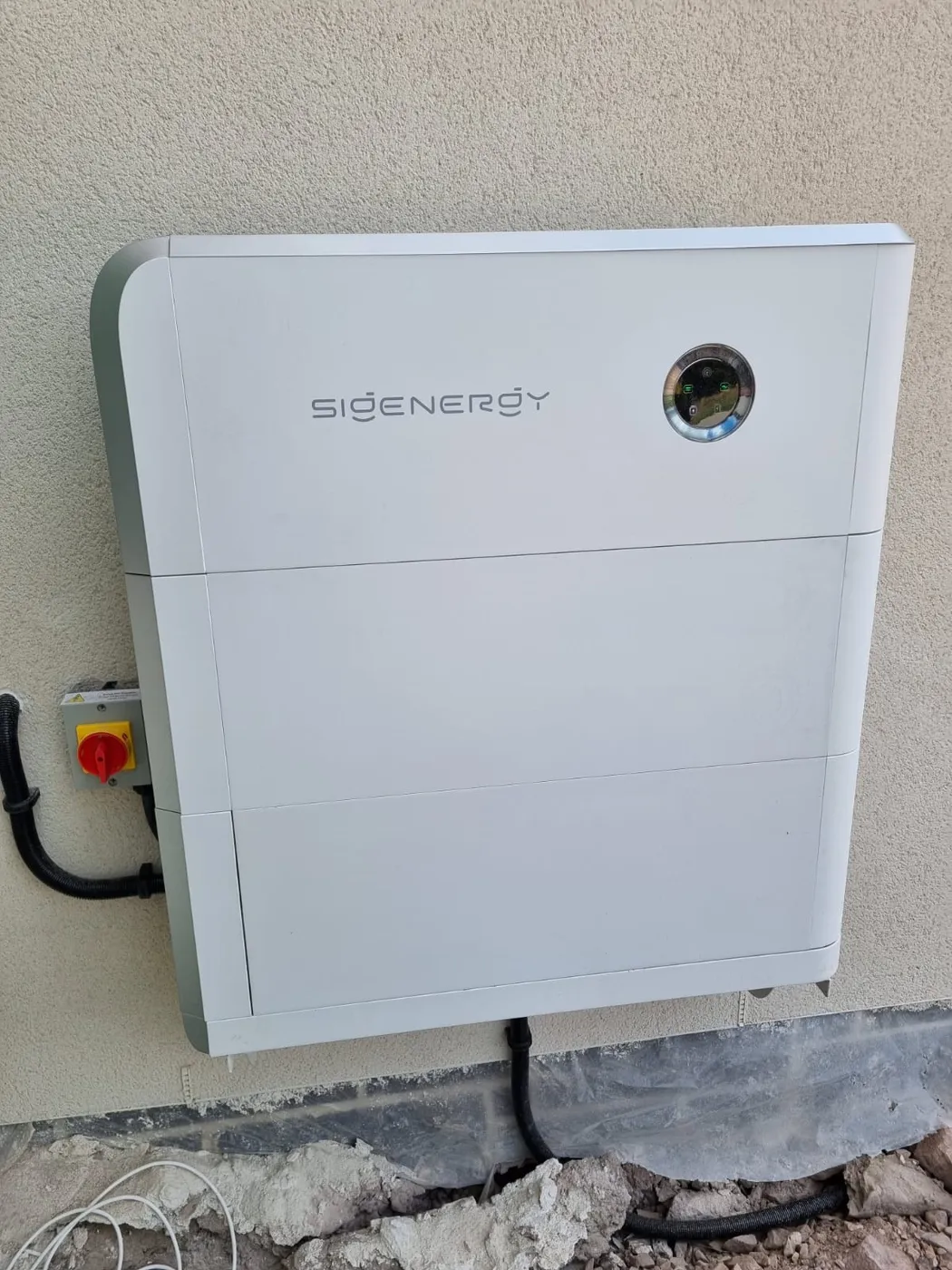
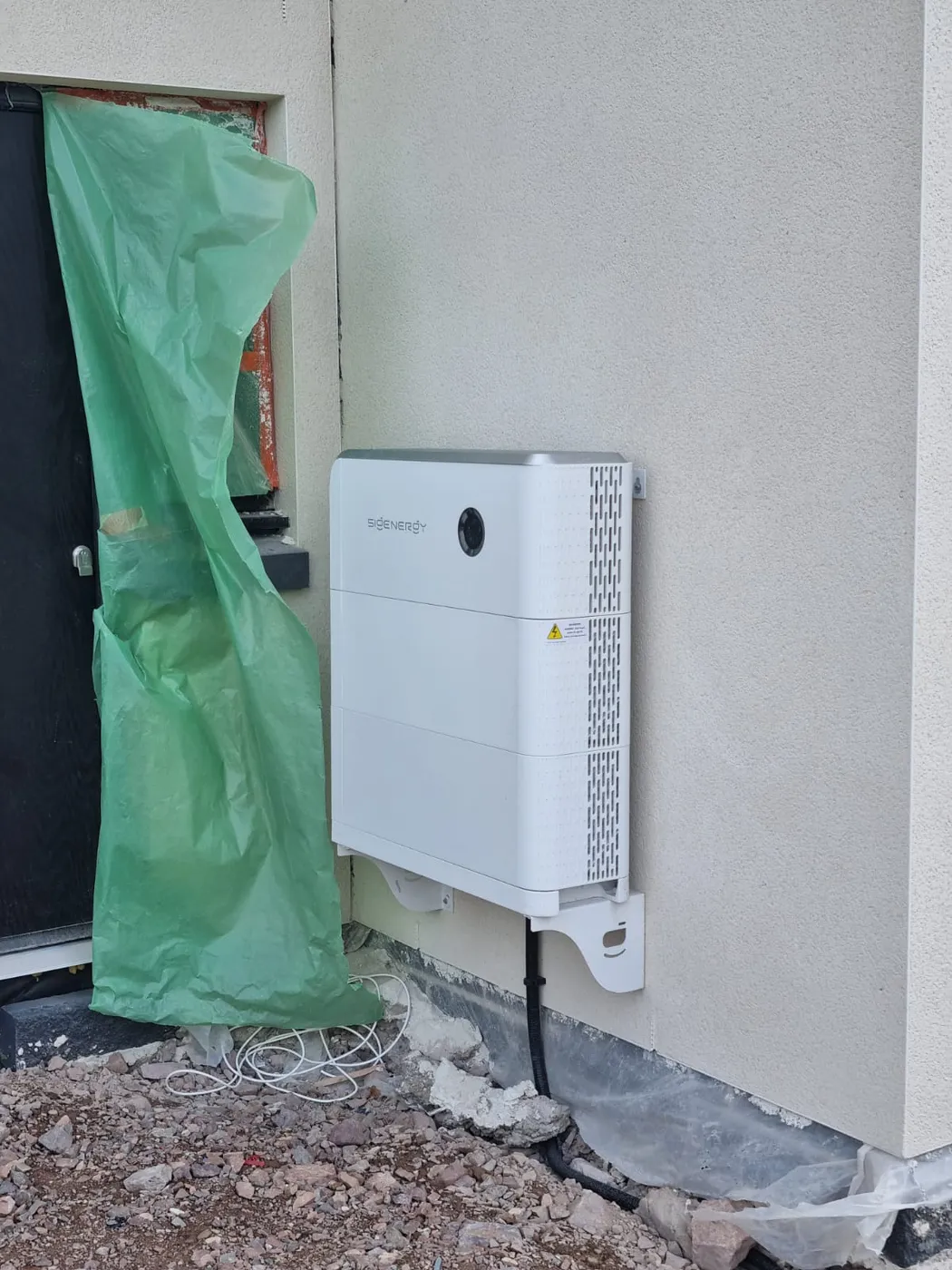
Replacing with a hybrid costs more now but lets a battery connect to the same inverter later. Two things to weigh. On a FIT system the battery would sit on the panel side of the generation meter, so the metering has to be arranged so that the meter still records only solar generation; our guide to how to add a battery to existing solar panels explains the options. And the hybrid's rating counts towards your G98 limit just as the old inverter's did.
If you're tempted to go bigger, talk to your licensee first. Ofgem says you must tell your FIT licensee about any change that increases or decreases the installation's total installed capacity, including replacing equipment with a larger or smaller capacity, and FIT isn't paid on extra capacity commissioned on or after 15 January 2016. An inverter above 3.68 kW also takes a single-phase home into G99. Comparing makes and models? Our best solar inverter UK guide sets out the main types and brands.
Feed-in Tariff payments when you replace an inverter
Ofgem's FIT guidance for generators (version 19, April 2026) lists inverters as part of a solar PV installation's generating equipment. You may repair or replace some or all of that equipment without affecting accreditation, provided the installation still meets the scheme rules: it stays solar PV, stays on the same site and isn't decommissioned. In practice:
- Tell your FIT licensee. Report the change in the way your statement of FIT terms sets out. A change in total installed capacity must be reported.
- Protect the generation meter. If it's replaced, removed or starts measuring anything other than your solar, your licensee needs to know.
- Take readings. Photograph the generation meter, with the date, before the old inverter comes off and after the new one goes on.
- Deemed export carries on. If you're paid deemed export, it's still calculated from the generation meter reading.
- MCS-FIT or ROO-FIT. Domestic solar systems up to 50 kW are MCS-FIT and only need to tell the licensee; ROO-FIT systems must also update their entry on Ofgem's Renewable Electricity Register.
The inverter's own screen isn't your FIT meter. Payments come from an approved generation meter, usually mounted near the inverter, so make sure whoever swaps the inverter leaves it undisturbed or tells you exactly what changed.
Telling the DNO about a replacement inverter
The network operator needs to know when generating equipment changes. The ENA's connection guide lists telling your DNO if you remove or replace your generating unit as an ongoing responsibility, and under G98 the installer sends the commissioning details for the new inverter, plus a decommissioning confirmation for the old one, within 28 days.
If the new inverter keeps the total within 16 A per phase (3.68 kW for a single-phase home), nothing more is needed. If it takes you over, a G99 application must be approved before the swap. SP Energy Networks runs the local network across Central and Southern Scotland and SSEN covers the north; we deal with both, and our network operator guide explains each one's process. Our explainer on the difference between your energy supplier and the DNO covers who does what.
MCS paperwork and warranties
Keep your original MCS certificate. It's the record of the installation, and export payment providers ask for an MCS certificate, or an equivalent, before paying the Smart Export Guarantee. After a replacement you should have the commissioning record, a copy of the DNO notification, the new inverter's warranty registration and a note of the settings applied, filed with that certificate.
Read the warranty before you choose. Paying extra for a longer one isn't always good value: the Energy Saving Trust warns that a 15-year inverter warranty can cost almost as much as a replacement. Some makers only give their extended warranty term if the unit is registered within a set period after commissioning, so we register it at handover. Our 5-year workmanship warranty covers the installation, and HIES insurance-backed cover protects that work if we were ever to stop trading.
How an Ecoaim inverter replacement works
- Tell us what you're seeing. A photo of the inverter label and any fault code, plus your recent generation meter readings, is enough to start.
- Diagnosis. We check the simple causes first, then test the strings and read the fault log.
- Options in writing. Like-for-like and, where it makes sense, a hybrid, priced side by side with the VAT treatment shown.
- Paperwork lined up. We confirm the DNO route and what your FIT licensee will need.
- Swap and commission. Our in-house team and vetted MCS-certified trade partners fit the new inverter; we test the loss-of-mains protection, check every string and record the meter readings.
- Handover. The app is reconnected, the warranty registered and the documents sent to you.
Get your free quote, or call 03330 384 380 with your fault code to hand.
Inverter replacement questions, answered
How much does it cost to replace a solar inverter? +
Will replacing my inverter affect my Feed-in Tariff? +
Do I need to tell the DNO if I replace my inverter? +
Can a solar inverter be repaired instead of replaced? +
Should I replace an old inverter that's still working? +
Does my new inverter have to be the same brand? +
What should I do if my GivEnergy inverter fails? +
Will a new inverter increase my solar generation? +
Related guides
Our reviews on Trustpilot
Free quote in 24 hours.
No high-pressure sales. No commission-driven scripts. Just a no-obligation survey + transparent quote — covering every postcode in Scotland's Central Belt.