
Solar Inverter Installation in Scotland: String & Hybrid
If you're planning solar panels, adding a battery or living with a solar inverter that's past its best, this page explains the box that does the real work. We design, fit and commission string and hybrid inverters for homes and businesses across Scotland's Central Belt, and we handle the network operator paperwork.




A solar inverter converts the direct current (DC) your panels produce into 230 V alternating current (AC) for your home and the grid. Along the way it hunts for the panels' best operating point, logs what the system produces and shuts down if the grid fails. A hybrid inverter does all of that and runs a battery too. On a single-phase home, inverters up to 3.68 kW connect under G98, with the network operator told within 28 days; anything bigger needs G99 approval first. The Energy Saving Trust expects an inverter to need replacing after around 12 years.
What a solar inverter does
Solar panels produce direct current, in amounts that rise and fall with the light, while your home and the grid run on 230 V alternating current at 50 Hz. The inverter switches the DC thousands of times a second and shapes the result into a clean sine wave locked to the grid. The Eco Experts puts a typical inverter's efficiency at around 95–98%, so only a few per cent is lost in the box. At the same time it does three other jobs:
- Maximum power point tracking (MPPT). The point at which a string of panels gives its most power shifts with cloud, temperature and shade, and the inverter keeps hunting for it. An inverter with more than one MPPT input can run an east roof and a west roof as separate strings.
- Grid protection. Under the ENA's G98 standard, the inverter must disconnect if the grid's voltage or frequency moves outside set limits or the grid is lost, and may only reconnect once conditions have been normal for at least 20 seconds. That protects engineers working on a line they believe is dead.
- Reporting. Most current inverters send generation data to an app or web portal, which is how you catch a fault before it costs you a season's output.
If you're starting from scratch, our solar panel installation page covers the full design and install.
Types of solar inverter compared
Five set-ups are common; the right one depends on your roof faces, shade and battery plans.
String inverters are the simplest and lowest-cost layout: one wall-mounted unit takes the DC from one or more strings of panels. Hybrid inverters add a battery connection, so if storage is likely in the next few years you avoid paying for a second inverter later. Microinverters, made by firms such as Enphase, convert to AC behind each panel, which helps on complicated or shaded roofs. Power optimisers condition each panel's DC output before a central inverter does the conversion. Three-phase inverters spread the output across all three phases of a three-phase supply, and the G98 limit rises to 11.04 kW (16 A per phase).
| Type | Where the conversion happens | Best suited to | Watch out for | Adding a battery later |
|---|---|---|---|---|
| String | One central unit | Simple, unshaded roofs facing one way | Shade on one panel drags down its string | Separate battery inverter, or a swap to a hybrid |
| Hybrid | One central unit with a battery port | New systems where a battery is likely | Costs more than a plain string unit | Connects to the same inverter |
| Microinverters | Behind each panel | Several roof faces, dormers, chimney shade | Roof access needed to replace a unit | AC-coupled, as the panels already output AC |
| Power optimisers | Behind each panel, plus a central inverter | Partly shaded roofs | Replacement inverter must suit the optimisers | Depends on the central inverter |
| Three-phase | One central unit across three phases | Larger homes, farms, commercial sites | Needs a three-phase supply | Three-phase hybrids take a battery directly |
Hybrid inverter or AC-coupled battery?
When storage is part of the plan, the battery joins the system in one of two ways. With a hybrid inverter, the battery is DC-coupled: solar charges it before anything is converted to AC, and one inverter handles panels, battery and grid. With an AC-coupled battery, the battery has its own inverter and connects on the household side, so the existing solar inverter carries on untouched.
For a new system, a hybrid is usually the neater design: one box, one app and one inverter rating counted against your grid connection limit. For a home that already has solar, the choice turns on the age of the existing inverter, your Feed-in Tariff status and how your meters are wired. We work through that decision on our page about how to add a battery to existing solar panels, and our guide to solar panels with battery storage covers new combined systems.
Sizing an inverter: the DC:AC ratio and the 3.68 kW line
An inverter rarely needs to match the array's peak DC rating in kWp. Panels seldom generate at their full rating for long, so UK designs often use a slightly smaller inverter; Energy Saving Trust guidance gives 2.4–3.3 kW for a 3 kWp array. The relationship between the two is the DC:AC ratio.
Central Scotland's light makes a modest ratio a safe choice. We ran PVGIS hourly data for 2014–2023 for a south-facing array at 35° in Livingston. In that model a 1 kWp array never averaged more than about 905 W in any hour, and around two-thirds of its yearly output arrived while it was producing less than half its rating. A 5 kWp array on a 3.68 kW inverter, a ratio of about 1.36, would lose roughly 0.4% of its annual output to clipping on those figures; at 6 kWp the loss rises to about 2.7%. Hourly averages smooth out short peaks, so treat those as floor figures.
The design must also respect the inverter maker's DC voltage and current limits, and the inverter rating decides your grid-connection route:
- G98. Inverters totalling up to 16 A per phase, which is 3.68 kW on a single-phase supply or 11.04 kW on three-phase, are fitted first, and the installer notifies the network operator within 28 days of commissioning.
- G99. Anything above that, including a solar inverter plus a separate battery inverter whose combined rating crosses the line, needs the network operator's approval before installation.
In Central and Southern Scotland the network operator is SP Energy Networks; in the north it's SSEN. Our DNO connections guide explains how each one works.
Lifespan, warranties and why inverters fail
Panels are built to last 25 years or more; inverters are not. The Energy Saving Trust advises that an inverter will need replacing after around 12 years, and notes that most inverter warranties start at five years and can often be extended by up to 15, though a 15-year extension can cost almost as much as a replacement inverter. Microinverters and power optimisers typically carry 25-year warranties.
Weather, damp, dust and poor ventilation all shorten an inverter's life. A unit exposed to the elements or shut in an airless corner has a harder time than one on a ventilated garage wall, and poor installation, such as badly made connections or a mismatched array, adds to the risk. If yours is showing faults or is well past ten years old, our page on inverter replacement covers the warning signs, the costs and what a swap means for Feed-in Tariff payments.
Monitoring: knowing your inverter is working
An inverter that has quietly tripped off looks exactly like one that's working. Most current inverters report to an app or web portal, and the Energy Saving Trust notes that some can email you if the system fails. At handover we set the app up and show you what a normal day looks like.
Compare each month with the same month last year rather than the month before: for a south-facing system near Livingston, PVGIS expects about 110 kWh per kWp in June but only about 19 kWh per kWp in December. If you're on the Feed-in Tariff, your payments come from the separate generation meter, not the inverter's screen, so a widening gap between the two is worth a call. And leave grid settings alone: G98 requires the inverter's protection settings to be secured against unauthorised changes.
Inverter brands we install
We fit a short list of platforms we know well and can support:
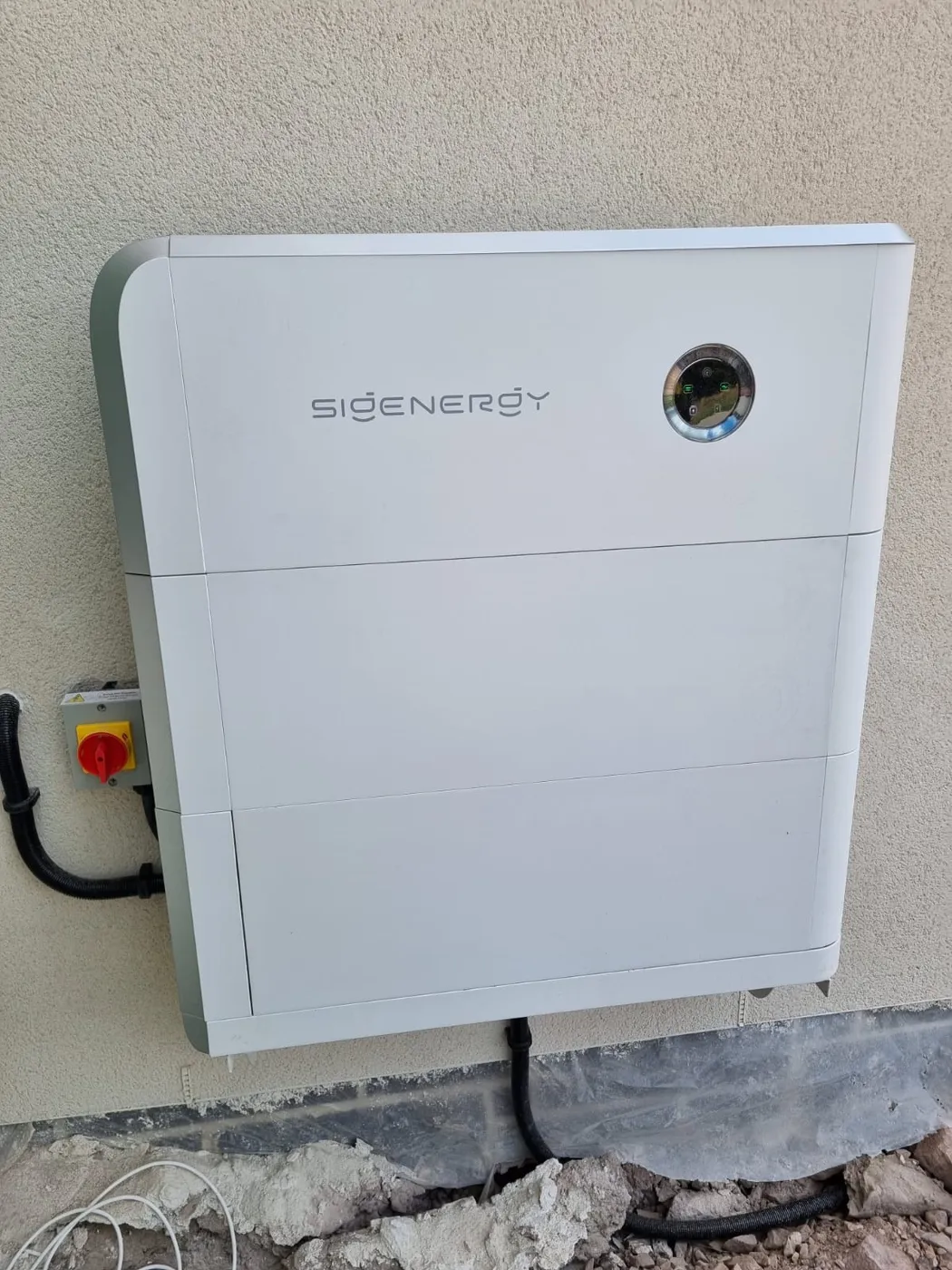
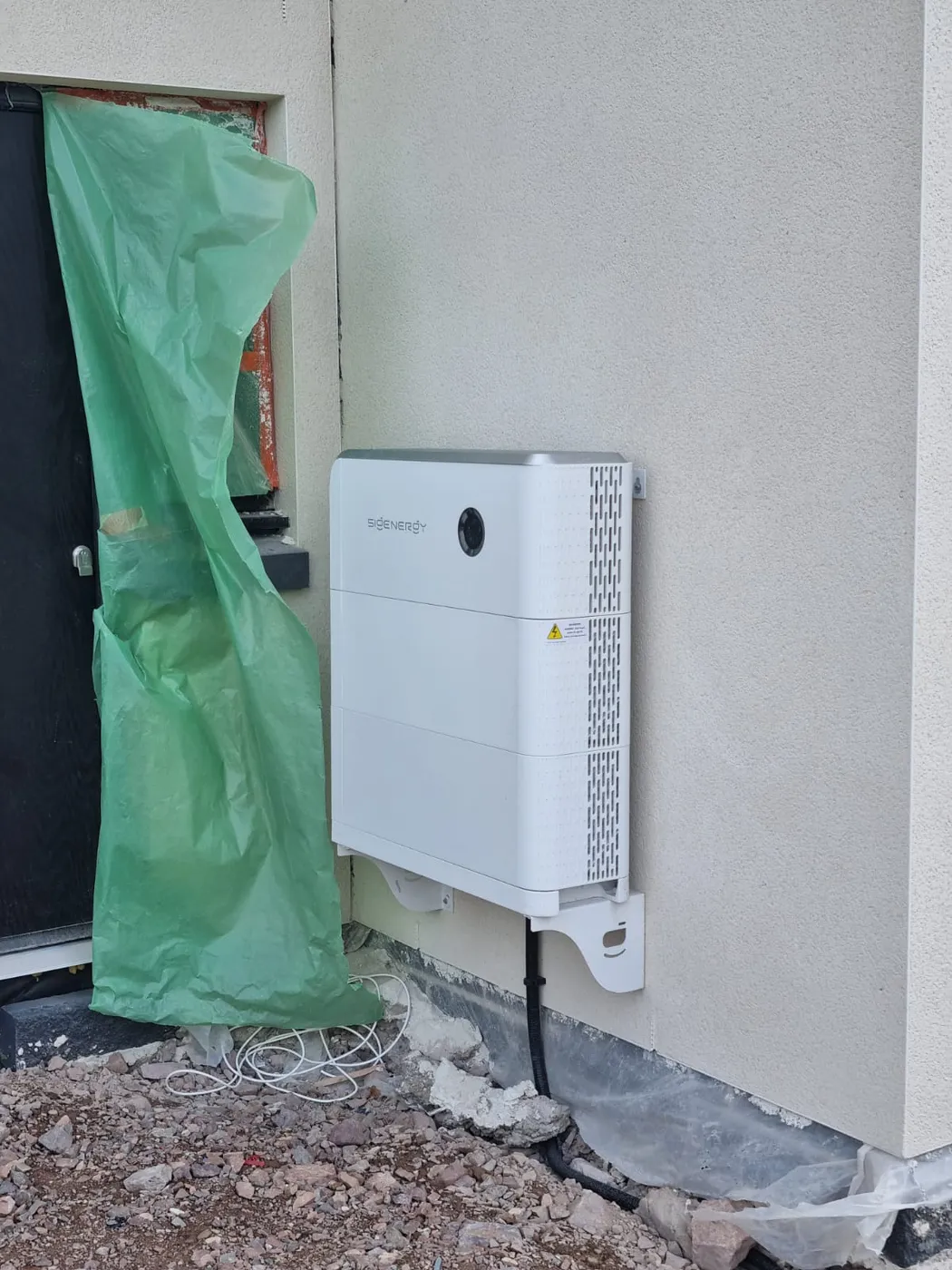
- Sigenergy. As a certified Sigenergy installer, we fit the SigenStor, which builds a hybrid inverter into a stackable battery system, and Sigenergy's three-phase hybrids.
- Sunsynk. Hybrid inverters in single-phase and three-phase versions, paired with a compatible battery.
- EcoFlow PowerOcean. A home battery system with its hybrid inverter built in.
- Tesla Powerwall. Powerwall 3 has its solar inverter built in, so on a new install the panels can connect to it directly. See our Tesla Powerwall installation page.
Other makers, including SolarEdge, Enphase, Fox ESS and Fronius, are compared for context in our best solar inverter UK guide. We recommend from the list above, and we'll say plainly if your roof would suit a different technology better.
Already have a GivEnergy system? GivEnergy Ltd went into administration on 9 April 2026 and its administrator has said it will not honour further hardware warranties; if yours fails, we can advise on repair or replacement.
Three-phase and commercial inverters
Larger homes, farms and businesses often have a three-phase supply. A fully type-tested three-phase inverter can connect under G98 up to 16 A per phase, 11.04 kW in total. Anything larger needs G99 approval before work starts, so commercial projects build the network operator's timescale into the programme.
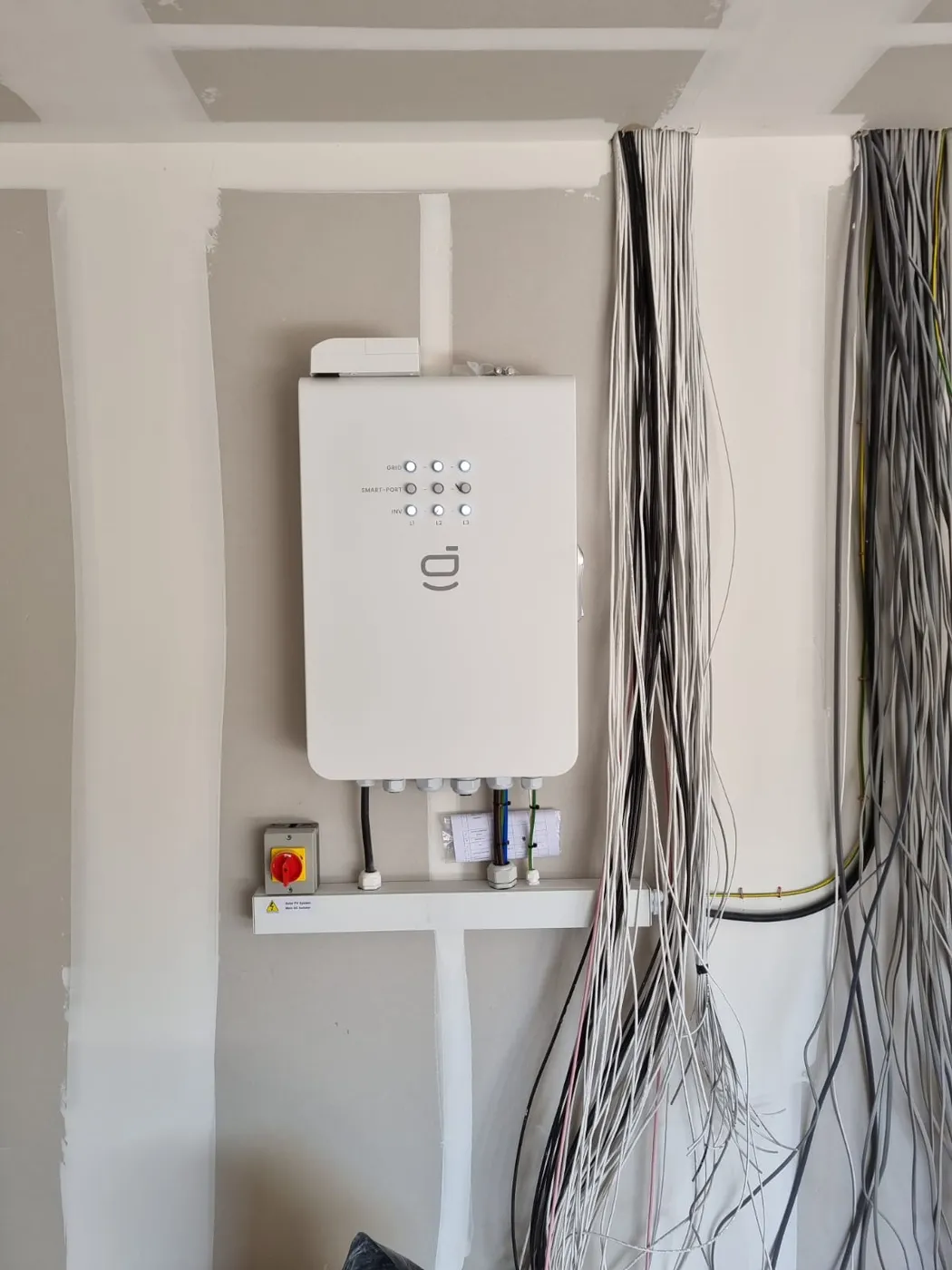
Three-phase hybrids bring the battery-ready design to bigger homes. On one new-build all-electric home we fitted a Sigenergy three-phase hybrid inverter with a battery and a Backup Gateway, designed around the house's 16 kW air source heat pump; the new-build case study has the detail.
For businesses, the inverter sits inside a wider design covering export limits, the site's demand profile and VAT at the standard 20% rather than the domestic zero rate. Our commercial SigEnergy systems page covers the three-phase hybrid and storage platform we install for business, farm and industrial sites.
What a solar inverter costs
On a new system the inverter is part of the package, not an extra. Our typical installed prices for Scottish homes in 2026, including 0% VAT, are:
- 4 kWp of solar, roughly 10 panels: £6,500–£8,500
- 4 kWp solar with a 5 kWh battery: £10,500–£13,500
- 8 kWp solar with a 10 kWh battery: £15,000–£19,000
For an inverter on its own, the independent market figures below give a guide. Hybrids cost more than plain string units, and access and any consumer unit work can add to the price.
HMRC's VAT Notice 708/6 counts the AC/DC inverter as part of a solar PV installation, and installing solar panels or a battery in a home is zero-rated until 31 March 2027, then 5%. Commercial installations pay 20%. For an exact figure for your property, Get your free quote.
| What you're buying | Market figure | Source (checked 6 October 2026) |
|---|---|---|
| Standard string inverter | £500–£1,000, depending on system size | The Eco Experts (July 2024) |
| Microinverter | £100–£150 per unit | The Eco Experts (July 2024) |
| Power optimisers | About £40 each, plus a central inverter of about £600 | The Eco Experts (July 2024) |
| Replacing an inverter | Around £800 | Energy Saving Trust, quoted by MoneySavingExpert |
| Home battery, for comparison | £1,500–£10,000; around £4,600 for 5 kWh | Energy Saving Trust |
What an Ecoaim inverter installation includes
As an MCS-certified inverter installer, we follow the same steps on every job, carried out by our in-house team and vetted MCS-certified trade partners and signed off by an Ecoaim engineer:
- Survey and design. We check the roof, shading, consumer unit and a ventilated spot for the inverter, and model the yield with PVGIS data for your postcode.
- Grid paperwork. We send the G98 notification or make the G99 application to SP Energy Networks or SSEN.
- Commissioning. As G98 requires, we functionally test the loss-of-mains protection, then check every string is generating as designed.
- Handover. You get the MCS certificate, the HIES insurance-backed warranty pack, the monitoring app set up and a walk-through of the system.
- Cover. Our 5-year workmanship warranty sits alongside the manufacturer's warranty.
We'll be straight with you if a smaller inverter, a different layout or no battery at all suits your home better. Get your free quote and we'll design around how your household actually uses electricity.
Solar inverter questions, answered
Do I need a hybrid inverter if I'm not buying a battery yet? +
What size inverter do I need for a 4 kWp solar system? +
Can I have an inverter bigger than 3.68 kW on a single-phase house? +
Where should a solar inverter be installed? +
Does a solar inverter work in a power cut? +
Is VAT charged on a new solar inverter? +
Can I mix inverter and battery brands? +
Related guides
Our reviews on Trustpilot
Free quote in 24 hours.
No high-pressure sales. No commission-driven scripts. Just a no-obligation survey + transparent quote — covering every postcode in Scotland's Central Belt.